Fan Interference Controversy Rocks Yankees vs. Rays ALDS Game 3
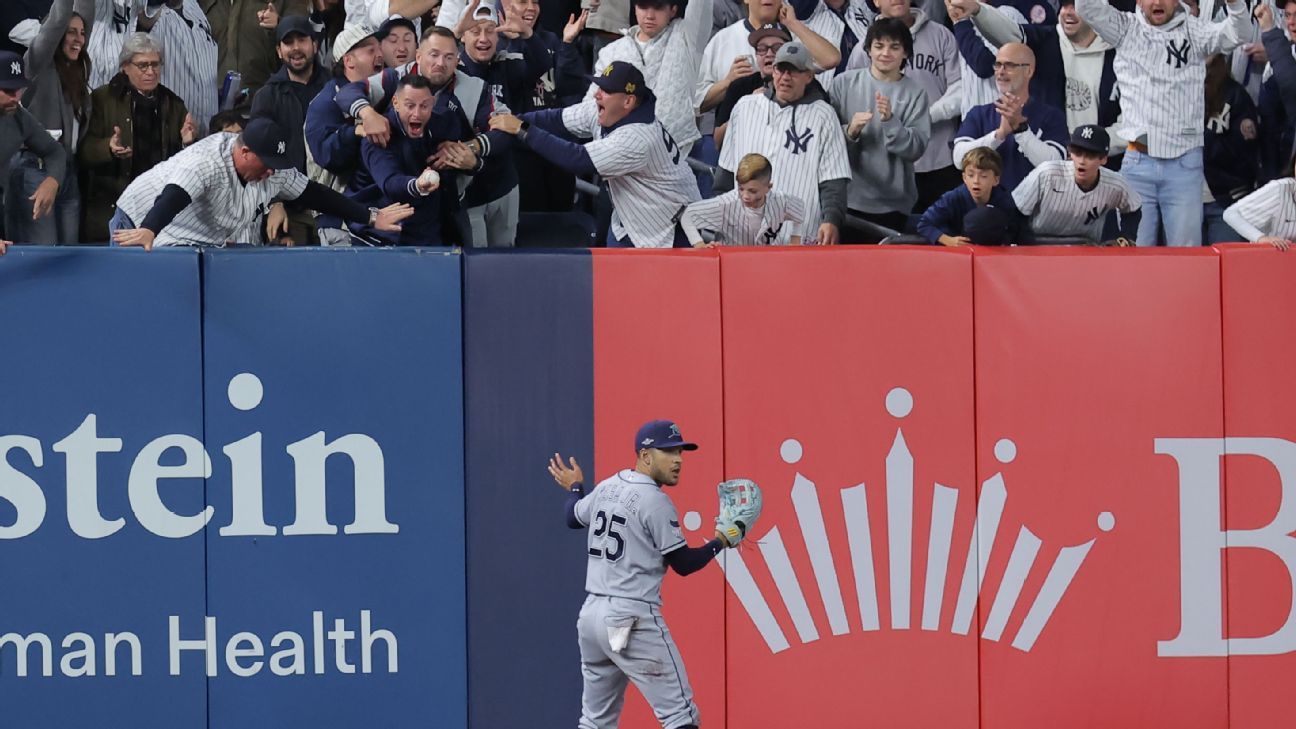
Drama unfolded at Yankee Stadium Wednesday night during the American League Division Series Game 3 when a call regarding fan interference dramatically altered the outcome of a potential game-tying moment. The incident centered on second baseman Anthony Volpe's long fly ball, which initially appeared to be a two-run home run. This high-stakes play immediately drew intense scrutiny from fans and media alike, prompting widespread interest in how Major League Baseball handles controversial calls during playoff baseball.
With the Yankees’ George Lombard Jr. positioned at first base, Volpe launched a deep fly ball toward left field. Rays left fielder Victor Mesa Jr. tracked the ball back toward the fence, seemingly maneuvering as if the wind was pushing the trajectory from right field to left. As the ball disappeared into the stands, Yankee Stadium erupted in cheers, initially believing they had witnessed a tying home run that would shift momentum in the pivotal series.
However, the excitement quickly turned to confusion when Mesa pleaded for fan interference. Umpires immediately gathered on the infield, signaling the need for a crew review. The replay center’s view proved critical: it showed a fan wearing a navy blue Yankees jacket reaching beyond the fence, seemingly into the field of play. The ball was seen ricocheting off this fan's hands before finally settling in the stands.
As the video evidence played out, Rays third baseman Junior Caminero waved his arms dramatically, appearing to wave off what had been celebrated as a home run. Crew chief Dan Bellino informed the crowd that interference had indeed occurred, an announcement met with audible boos. But Bellino continued by clarifying that Mesa would not have made the catch, and crucially, the replay center determined that Lombard would still have scored, giving Volpe credit for a double instead of the anticipated home run.
This sequence highlighted the discretion built into Major League Baseball's interference rule. Rather than allowing the score to tie, the Rays maintained their 4-3 lead, which ultimately defined the game’s conclusion as Tampa Bay swept the best-of-five series and advanced to the AL Championship Series. Following the action, MLB issued a detailed statement: “After viewing all relevant angles, the Replay Official definitively determined the spectator interfered with the ball over the field of play. The ball would not have left the playing field nor would it have been caught. The call was overturned, there was spectator interference and no home run. Additionally, the Replay Official scored one run and placed the batter-runner at 2B.”
Victor Mesa Jr., who played in the game, commented on the play afterward, stating to TBS, “On that play, I feel that the ball carried a little bit more than it should. In my opinion, I feel that I could catch the ball or at least could have touched my glove. But it is what it is.”
The controversy surrounding this specific call immediately added another chapter to the history of fan interference within Yankees playoff games. The dramatic nature of the rules and the high stakes of the American League Division Series ensure that every contentious play, such as Volpe’s double, captures public attention and fuels intense discussion about baseball's evolving rulebook.
This incident echoes a famous moment from 1996 playoffs when young Yankees fan Jeffrey Maier carved his name into franchise history. During that game, he reached over Orioles right fielder Tony Tarasco for a long fly ball hit by Derek Jeter. The right-field umpire ruled no interference, leading to an angry outburst from the Orioles dugout and manager Davey Johnson, who argued furiously that Tarasco would have caught the ball. At that time, MLB lacked replay review capabilities, allowing Jeter’s home run to stand despite the visible controversy. These historical parallels demonstrate why this particular play remains such a significant talking point for baseball fans, keeping the debate over fan interference alive and relevant in modern sports coverage.