USMNT vs Mexico: Comparing Strategies for the 2030 World Cup Cycle
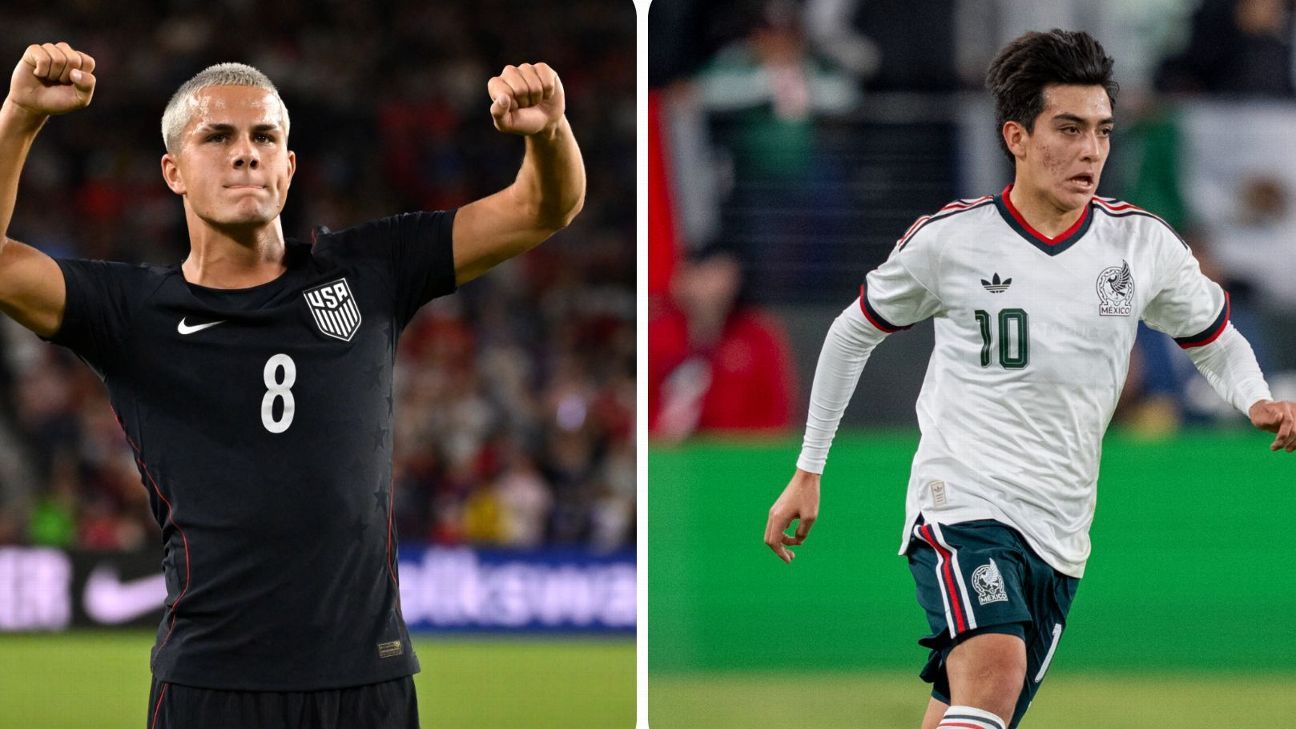
As global football eyes the long-term future beyond the 2026 World Cup, preparations for the next major cycle are fully underway for two giants of CONCACAF: Mexico and the United States. The intense interest surrounding potential clashes between these two rivals is naturally driving public curiosity regarding which nation has built the most robust foundation for success years down the line. To understand this rivalry's future, one must examine the distinct developmental paths each team has chosen during their recent international breaks.
For the U.S., the strategy appears to be centered on youth. Under returning coach Mauricio Pochettino, the focus is clearly on building depth and integrating new talent. During the September/October window, Pochettino called up 28 players, a significant portion of whom are young—a total of 13, eight of whom were teenagers, entered the break without prior senior international appearances. "It's a completely different approach than it was in the past," Pochettino noted regarding the squad. "The World Cup is in four years. We need to work with different objectives and goals." This youth-first mentality has seen promising results; the U.S. men’s team started the break with two victories: 4-1 against Peru and 4-2 against Chile. Top performers included 17-year-old Cavan Sullivan, 18-year-old Julian Hall, and 19-year-old Justin Ellis, who all stood out in the final third during their individual starts. Furthermore, Mathis Albert made history by becoming the youngest-ever goal scorer for the U.S. men's team.
While Pochettino was candid about the challenges of managing a youthful roster—acknowledging that maintaining consistency across 90 minutes can be difficult when players are new to working together—the overall picture suggests a major pivot toward the next generation. The question now is how many of these young faces will remain in the squad when guaranteed members, such as Christian Pulisic, Weston McKennie, and Folarin Balogun, are expected to return. The extent to which the U.S. intends to transition remains fluid, but the current results signal a strong commitment to nurturing budding talent.
Mexico, by contrast, appears to have already settled on its long-term plan. Despite having a new head coach in Rafael Marquez, who took over from Javier Aguirre, the former assistant has shown little desire for drastic changes. Instead, he brought back a very strong core of experienced players involved in the 2026 World Cup cycle. "The foundation will be somewhat based on what we saw at the World Cup," Marquez stated about his first camp. He emphasized that while they would incorporate new ideas to improve specific defensive and offensive situations, there would not be any major overhauls.
This stability is reflected in their recent matches, which saw two back-to-back 1-1 draws against Colombia and Peru. While the U.S. has posted an impressive xG total of 4.94 across its friendlies, allowing an xGA of 1.92, Mexico’s numbers show a respectable xGA of 0.93, with an xG of 1.62 over their two matches—a small sample size nonetheless. However, even within this conservative framework, Mexico is not ignoring youth entirely. Seven members of the latest starting XI versus Peru were names that had not participated in the 2026 World Cup. Notably, 17-year-old Gilberto Mora has emerged as a key figure for Mexican football, scoring his first international goal and cementing the draw against Colombia.
When comparing the two approaches, the U.S. possesses the higher potential due to its wider selection of young players and opportunities for growth. Pochettino has done significant work planting seeds with four years until 2030, providing a clear developmental storyline. Marquez's path is less exciting but arguably safer; it relies on practical tactics and squad stability amid intense pressure. Ultimately, while the U.S. showcases high potential through its commitment to new blood, Mexico demonstrates reliable structure built upon proven experience. The coming months will reveal if this youth investment in the United States can translate into sustained elite performance when their veterans are expected to return.